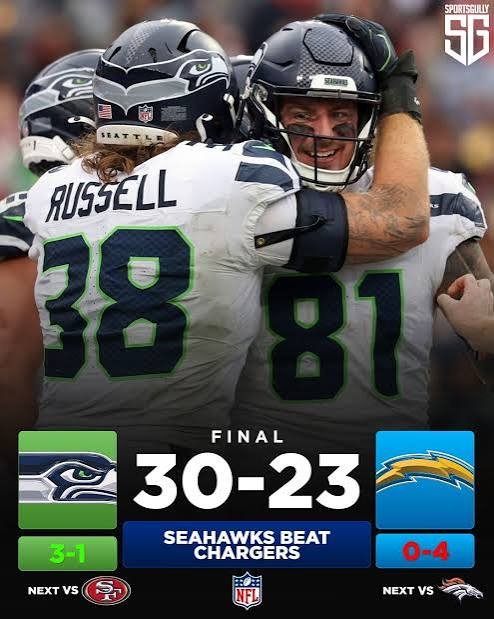
 The Seattle Seahawks strengthened their early-season position with a 30–23 victory over the Los Angeles Chargers at Lumen Field in Week 4. The result moved Seattle to 3–1 and gave the team another important home win as it continues to establish its identity under head coach Mike Macdonald. A winning record at this stage does not settle the larger questions surrounding a season, but it provides a valuable foundation and reflects the Seahawks’ ability to handle a competitive opponent in front of their home crowd.
Seattle’s performance showed why the team has reason for optimism. The Seahawks produced enough offensive and defensive efficiency to control important stretches, respond to challenges, and preserve their advantage when the game remained within reach for Los Angeles. The 30-point total demonstrated that the offense could generate the production required to win, while the defense made enough critical plays to prevent the Chargers from turning the contest in their favor. Those elements are essential for a team seeking consistency over the course of a long schedule.
At the same time, Macdonald’s standards make clear that the victory was not a flawless performance. Seattle’s success was accompanied by recurring execution issues that can become more damaging against stronger opponents or in tighter fourth-quarter situations. Penalties, missed assignments, lapses in technique, or inconsistent decision-making can undermine otherwise productive stretches, and the coaching staff will expect those problems to be addressed rather than overlooked because of the final score. That tension defines the importance of the win: it is both an encouraging step and a warning. The Seahawks have demonstrated that they can produce a positive result while still leaving meaningful room for improvement. Their 3–1 start creates momentum, but maintaining it will depend on converting that momentum into greater discipline, sharper execution, and a more complete performance each week.
Seattle’s rushing attack supplied one of the clearest positives in the 30–23 victory over the Chargers. Rather than relying exclusively on the passing game to generate momentum, the Seahawks used consistent runs to establish a more balanced offensive rhythm. That balance made the offense less predictable and helped create manageable situations on subsequent downs. It also allowed Seattle to dictate more of the game’s tempo, preventing every possession from becoming a high-pressure test of the quarterback and passing unit.
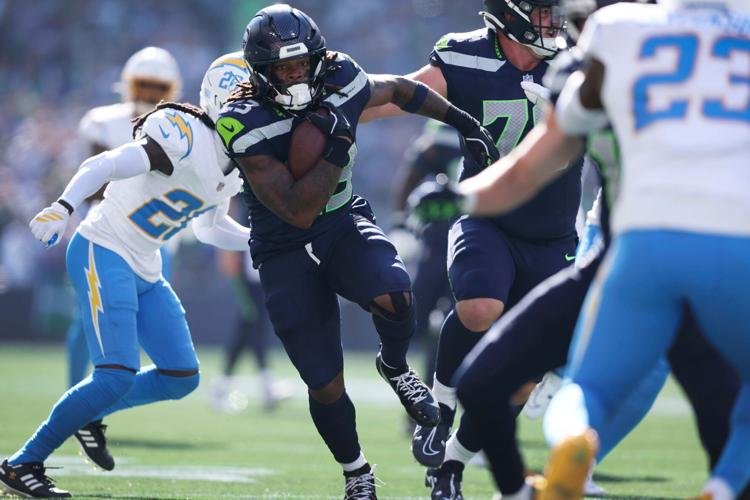 A productive ground game is valuable beyond the yardage it produces. Sustained rushing efforts can extend drives, improve field position, and keep the defense on the sideline. Those possessions give Seattle additional opportunities to protect a lead while limiting the number of chances available to an opposing offense. They can also help preserve defensive energy over the course of a game, an important consideration when the Seahawks are trying to close out a competitive result. By maintaining an effective run-pass balance, Seattle can make its offensive operation more stable and reduce the pressure placed on individual plays.
Head coach Mike Macdonald’s emphasis on discipline applies directly to preserving this foundation. Continued rushing success will require coordinated blocking, sound assignments, and patience when opponents adjust their fronts or commit additional defenders to the box. Secure ball handling is equally important, since a turnover can erase the value of an otherwise promising drive and quickly change momentum. The Seahawks must also continue executing in short-yardage and late-game situations, when defenses are most likely to anticipate the run. If Seattle can maintain that level of consistency while avoiding penalties and missed responsibilities, its ground attack should remain a dependable tool for controlling pace, protecting leads, and supporting a more efficient overall offense in future games.
Seattle’s defense did not produce a flawless performance against the Chargers, but it showed the cohesion required to finish a competitive game. Los Angeles continued to challenge the Seahawks throughout the contest, creating moments in which a single missed assignment or mistimed decision could have changed the result. Rather than allowing those situations to fracture the unit, Seattle continued communicating, adjusting, and working collectively toward the next snap.
Staying together on defense involves more than making an occasional impact play. It requires every player to understand his responsibility, relay information before and after the snap, and respond constructively when an opponent gains momentum. The Seahawks demonstrated that resilience by limiting the damage from difficult sequences and maintaining their composure as the Chargers attempted to extend drives. Their ability to remain connected helped prevent isolated mistakes from becoming larger breakdowns.
 Head coach Mike Macdonald’s praise centered on that collective response rather than suggesting the unit had solved every issue. A defense can withstand adversity while still needing to improve its consistency. Seattle will need to communicate with greater precision, play with more disciplined technique, and avoid giving opponents unnecessary opportunities through penalties or missed details. Preventing extended drives remains especially important, because long possessions test a defense’s concentration and can place additional pressure on the offense.
Closing out a 30–23 victory nevertheless provides meaningful confidence. The Seahawks were required to defend with the game still within reach, and they finished the assignment without losing their structure. That experience can reinforce trust among the players and establish a foundation for more reliable late-game execution. The next step is to turn that resilience into a repeatable standard: limit breakdowns, recover quickly after difficult plays, and maintain the same collective focus from the opening series through the final whistle.
Mike Macdonald used the Seahawks’ 30–23 victory over the Chargers to make a broader point: a 3–1 record is encouraging, but it is not evidence that Seattle is consistently meeting its own standard. The coach’s postgame message balanced satisfaction with urgency. Seattle showed enough quality to win, yet its performance remained too uneven in areas that can decide tighter games.
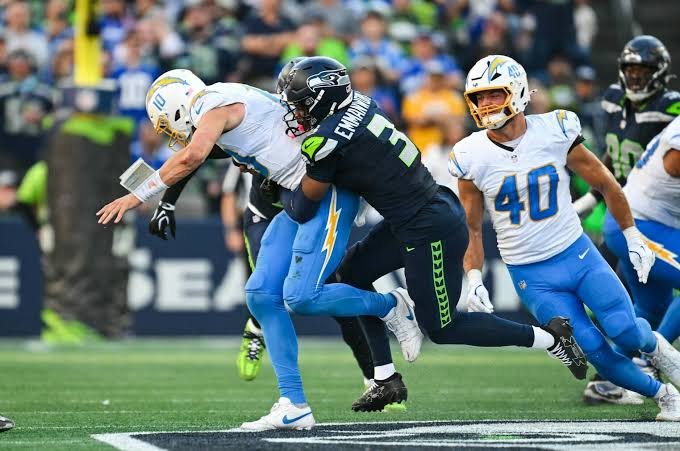 The seven personal foul penalties were not a minor blemish on an otherwise clean afternoon. Macdonald described that level of undisciplined play as unacceptable, particularly because penalties can erase positive plays that required execution and effort. A successful run can be wiped out, an opponent can receive fresh downs after a stalled possession, and field position can shift without the defense having to earn it. Those moments extend drives, change momentum, and place unnecessary pressure on every subsequent snap. In close contests, such mistakes reduce the margin for error and can turn a manageable challenge into a frustrating loss.
Macdonald also identified ball security as an immediate priority. Protecting possessions requires dependable decisions, secure handling, and the concentration to finish every play without offering opponents an opportunity to regain control. His commitment to correcting both issues reflects the demands of sustainable success: Seattle must preserve its own advantages while refusing to give away yards, downs, or momentum. The Chargers victory therefore serves as a useful checkpoint rather than a final verdict. The Seahawks have demonstrated that they can run the ball effectively, defend together, and finish a game under pressure. Their next step is turning those strengths into a cleaner, more complete style of football, one defined by discipline, secure possessions, and execution that matches the standard Macdonald expects.
